Showing posts with label Interesting Facts. Show all posts

November 19, 2022

Rhyming Bias


Otherwise known as the "rhyme-as-reason effect," the rhyming bias is a proven mental tendency people have to trust things that rhyme more so than things that don't.

Not only that, but rhymes also stick in our heads better, and longer, like many songs heard in our childhood. Incidentally, it's why I've always said Disney should make all of its animated features musicals, because those songs help anchor their stories in people's very beings, making potential lifelong fans of them, whereas those without songs often fade into obscurity.

So why does our brain latch onto rhymes so well (even if it could be to our detriment)? Well, rhymes makes statements catchy, pretty, and easier to process because of it (our brain LOVES patterns!).

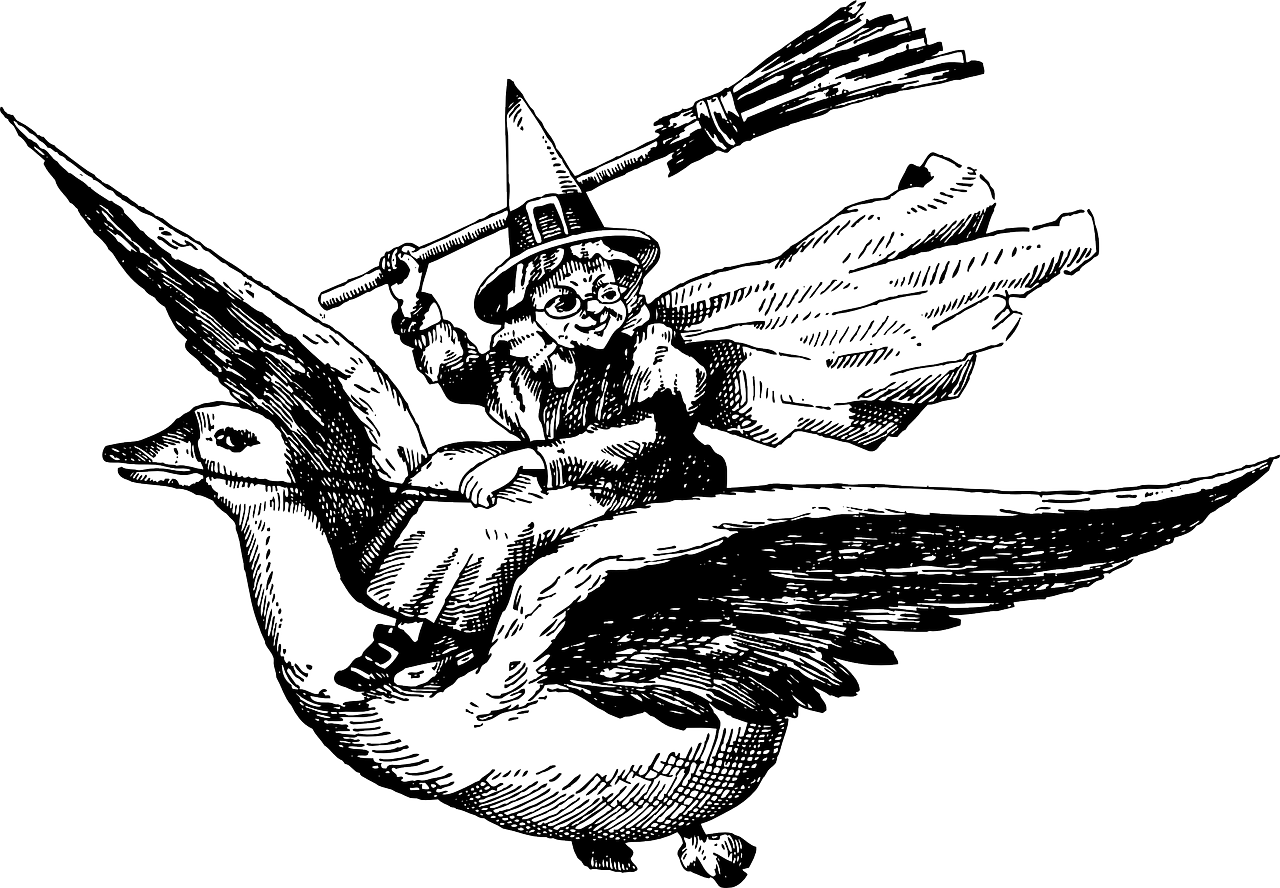
As stated on Effectiviology, "[p]eople, such as marketers or politicians, might use the rhyme-as-reason effect as a manipulation technique, potentially in an attempt to get you to act irrationally and against your best interests." So whenever you hear a rhyme, be careful! Someone might be trying to pull one over you (looking at you, Mother Goose!).


October 6, 2022

Leadership Dos and Don'ts

I've been reading this book people kept recommending to me: Napoleon Hill's Think and Grow Rich*. First published in 1937, it talks about the principles one needs to follow to become rich in an era marked by the Great Depression.

The book has a lot of interesting advice (a lot of which is reminiscent of the Law of Attraction that's become big since the start of the 21st c.), as well as some sections which, although clearly dated, make for fascinating windows into that not-so-long-ago piece of history.

One of the chapters delves into what makes a great leader, as one needs to be a leader to make a fortune (as opposed to followers who are much less likely to get super rich), and the pitfalls these great leaders must avoid if they do not wish to go the way of the dodo.

I found his points to be thought-provoking, particularly in our world's current state where everything seems so uncertain (sometimes on the brink of global catastrophe), and there appears to be a dearth of good leadership.

So here's a summary of what Napoleon Hill advises on how to be a great leader. Tell me how you feel about it all after in the comments :)

Leadership Dos:


  1. Have enduring courage and self-confidence, or no one (at least no one intelligent) will want to follow.
  2. Have self-control.
  3. Be fair and just, or risk losing your followers' respect.
  4. Remain definite in your decisions, as opposed to being wishy washy. This goes back to being self-confident.
  5. Plan your work, and work your plan (no guessing or being vague).
  6. Do more than paid for, and more than what's required of followers.
  7. Have a pleasing personality. Again, respect is key.
  8. Have and show both sympathy and understanding of followers and their problems.
  9. Master the details of your business/service.
  10. Assume full responsibility, even for your followers' mistakes.
  11. Cooperate, and encourage others to do the same. Here, Hill insists that the only way to be a true leader is through leading by consent (as opposed to by force, as history has proven repeatedly that kings and despots always fall at some point).
Leadership Don'ts:
  1. Be too busy to organize and understand the details of the business.
  2. Be unwilling to perform whatever you ask others to do.
  3. Expect to be paid for what you know instead of what you do (the proof is in the pudding, not its professed recipe).
  4. Kick followers down for fear of their becoming greater. The better they become, the better partners they are in helping you achieve your goals/vision.
  5. Leave your imagination to the side. Leaders need to be able to meet emergencies and create plans for their followers, and that often means thinking outside the box or connecting the dots in new ways.
  6. Be selfish and not give credit where credit's due. As Hill states, "The really great leader claims none of the honors."
  7. Indulge in excesses, including outside of work (addictions are never good).
  8. Be disloyal. (Big no no to the whole Brutus and Judas game plays.)
  9. Emphasize your authority as a leader, instead of encouraging to follow your guidance and vision. This refers back again to not being one who leads by force or fear.
  10. Enforce hierarchy. Great leaders make themselves available to all their followers, without hiding behind their direct subordinates (especially in bad times).
So, do you think the lists missed anything crucial in order to become a successful leader? Let me know in the comments below!


*Disclaimer: Please note that some of the links are affiliate links, and at no additional cost to you, I may earn a commission should you choose to buy the recommended item. If the link is an Amazon link, as an Amazon Associate, I earn from qualifying purchases.

September 27, 2021

On This 28th of September 1943...


Georg Ferdinand Duckwitz

This excerpt is taken from Humankind: A Hopeful History by Rutger Bregman, which I highly recommend to all and everyone.

   In the headquarters of the Workers Assembly Building on 24 Romersgade in Copenhagen, [Denmark,] the Social Democratic Party leaders have all convened. A visitor in a Nazi uniform stands before them. They are staring at him in shock.

   'The disaster is at hand,' the man is saying. 'Everything is planned in detail. Ships will anchor at the mooring off Copenhagen. Those of your poor Jewish countrymen who get caught by the Gestapo will forcibly be brought on board the ships and transported to an unknown fate.'

   The speaker is trembling and pale. Georg Ferdinand Duckwitz is his name. He will go down in history as 'the converted Nazi,' and his warning will work a miracle.

   The raid was set to take place on Friday 1 October 1943, following detailed plans drawn up by the SS. At the stroke of  8 p.m., hundreds of German troops would begin knocking on doors up and down the country to round up all the Danish Jews. They would be taken to the harbor and boarded onto a ship equipped to hold six thousand prisoners.

   (...) Up until this moment there had been no discriminatory laws, no mandatory yellow badges, no confiscation of Jewish property. Danish Jews would find themselves being deported to Polish concentration camps before they knew what had hit them.

   That, at least, was the plan.

   On the appointed night, (...) the Germans discovered that the Jews had been forewarned of the raid and that most had already fled. In fact, thanks to that warning, almost 99 percent of Denmark's Jews survived the war.

(...) 'The answer is undeniable,' writes historian Bo Lidegaard. 'The Danish Jews were protected by their compatriots' consistent engagement.'

Fleeing Denmark for Sweden

   When news of the raid spread, resistance sprang up from every quarter. From churches, universities and the business community, from the royal family, the Lawyers Council and the Danish Women's National Council--all voiced their objection. Almost immediately, a network of escape routes was organized, even with no centralized planning and no attempt to coordinate the hundreds of individual efforts. There simply wasn't time. Thousands of Danes, rich and poor, young and old, understood that now was the time to act, and that to look away would be a betrayal of their country.

   'Even where the request came from the Jews themselves," historian Leni Yahil noted, 'these were never refused.' Schools and hospitals threw open their doors. Small fishing villages took in hundreds of refugees. The Danish police also assisted where they could and refused to cooperate with the Nazis. 'We Danes don't barter with our Constitution,' stormed Dansk Maanedspost, a resistance newspaper, 'and least of all in the matter of citizens' equality.'

   Where mighty Germany was doped up on years of racist propaganda, modest Denmark was steeped in humanist spirit. Danish leaders had always insisted on the sanctity of the democratic rule of law. Anybody who sought to pit people against each other was not considered worthy to be called a Dane. There could be no such thing as a 'Jewish question.' There were only countrymen.

Denmark at Liberation
   In a few short days, more than seven thousand Danish Jews were ferried in small fishing boats across the Sound separating Denmark from Sweden. Their rescue was a small but radiant point of light in a time of utter darkness. It was a triumph of humanity and courage. 'The Danish exception shows that the mobilization of civil society's humanism [...] is not only a theoretical possibility," writes Lidegaard. 'It can be done. We know because it happened.'

(...)

   In her book Eichmann in Jerusalem, Hannah Arendt makes a fascinating observation about the rescue of the Danish Jews. 'It is the only case we know,' she wrote, 'in which the Nazis met with open native resistance, and the result seems to have been that those exposed to it changed their minds. They themselves apparently no longer looked upon the extermination of a whole people as a matter of course. They had met resistance based on principle, and their "toughness" had melted like butter in the sun...'

The Oresund Bridge that now links Copenhagen, Denmark, to Malmo, Sweden, was built in 1999


September 7, 2021

When Art Could Literally Kill You

The Basilica Di Santa Croce, Florence, Italy

I have been reading Maggie Stiefvater's The Dreamer Trilogy, a real fun fantasy series about Dreamers, people who can bring anything they make up in their dreams into the real world, and the Moderators who want to wipe them out to prevent the end of the world. In the trilogy's second installment, Mister Impossible, there is mention of the Stendhal Syndrome, which totally peaked my interest. Hence this post.

It's amazing how many new syndromes I learn about reading fantasy fiction (the last one being the Marie Antoinette Syndrome which I discovered while reading House of Hollow), eh?

Anyway, the Stendhal Syndrome is named after the French author who described his intense reaction to the Basilica of Santa Croce in 1817, whose beauty nearly gave him a heart attack:

Stendhal

"I was in a sort of ecstasy, from the idea of being in Florence, close to the great men whose tombs I had seen. Absorbed in the contemplation of sublime beauty ... I reached the point where one encounters celestial sensations ... Everything spoke so vividly to my soul. Ah, if I could only forget. I had palpitations of the heart, what in Berlin they call 'nerves'. Life was drained from me. I walked with the fear of falling." (1)

Symptoms include dizziness, tachycardia, heart palpitations, shortness of breath, ... visual and auditory hallucinations, paranoid persecutory delusion, and depersonalization disorders. Basically, the person finds him/herself so overwhelmed by the beauty of the art, that their brain's completely overwhelmed and short circuits.

Quite intense, huh? 

Three hundred years prior, Florence had hosted three great artists at the same time: Michaelangelo, Leonardo, and Botticelli, and their fingerprints have been left all over the city. But it is not the only place that has similar effects. Dr. Hiroaki Ota noticed similar reactions to Paris, while Dr. Bar-El coined the term Jerusalem Syndrome for the same symptoms experienced by people in the Holy City of Jerusalem.

Freud himself "wrote about severe feelings of alienation and depersonalization upon visiting the Acropolis of Athens, and writer Fyodor Dostoevsky experienced severe paralysis, and absence when faced with Hans Holbein's Le Christ mort au tombeau in Basel, Switzerland." (2)

Arias, MD, draws is even further, stating that "[e]cstatic epilepsy shares symptoms and mechanisms

The Ecstasy of Saint Teresa

with orgasmic epilepsy (spontaneous orgasms in the course of epileptic seizures), musicogenic epilepsy (epileptic seizures triggered by listening to a certain musical piece), and also with Stendhal syndrome (neuropsychiatric disturbances caused when an individual is exposed to large amounts of art) and some autoscopic phenomena (out-of-body experiences that occasionally take place in imminent death situations). In all these events, there are pleasant and affective symptoms which have a great impact on patients." (3)

Curioser, and curioser. And also a little scary... don't you think?

PS: I am really enjoying Mister Impossible (in fact, the whole trilogy, though only the first 2 books are available as of the date of this post), for those of you who are into YA urban fantasy stories--it's got great characters, lots of actions, and really great descriptions (and for one who's not that much into descriptions of places in general, that's saying a lot)!

Sources:

(1) Wikipedia article on the syndrome

(2) Stendhal Syndrome: a clinical and historical overview 

(3) Neurology of ecstatic religious and similar experiences: Ecstatic, orgasmic, and musicogenic seizures. Stendhal syndrome and autoscopic phenomena.

April 16, 2021

Marie Antoinette Syndrome

Let them eat brioche*.

Many of us are familiar with the famous last Queen of France who is said to have pronounced those words when her people were dying of hunger(1)


I bring Marie Antoinette up, because I recently read House of Hollow, an excellent fantasy-horror novel by Krystal Sutherland. The novel is about three sisters who mysteriously disappeared in their childhood, only to reappear a month later, with no memories of what had happened to them. Shortly after the girls' reappearance, their hair turned suddenly white, a medical condition that doctors in the novel call the "Marie Antoinette Syndrome". 

Turns out this syndrome is real** and comes from the embellished witness accounts that state that Marie Antoinette's hair turned suddenly white right before the Revolutionaries had her pretty neck offered to the guillotine (this was in 1793, a month short of her 38th birthday).

As an article on Healthline(2) states, a similar occurrence was reported to have happened a couple centuries prior, with Thomas Moore (also upon his execution), and, more recently, with WWII bombing survivors. 

But, although (chronic) stress could be a catalyst for such a dramatic whitening of hair, science tells us it's not the actual cause, and certainly does not happen that quickly. Instead, other possible reasons listed include: pattern baldness, which would suddenly expose the white hairs we already have but haven't noticed until then; a genetic predisposition to graying hair; hormonal changes, including thyroid issues, menopause or a drop in testosterone levels;  nutritional deficiencies, and the B12 vitamin in particular; and vitiligo, which impacts our body's pigmentation.

Still, I can imagine that the state of Marie Antoinette at her execution must have been quite a contrast to the popular vision people may have had of her as a young, pretty and profligate queen. After all, she had just spent ten weeks in prison, and that was after a couple of years of house arrest and failed attempts to flee the country. This sudden contrast between reality and the popularized image of her may thus explain the idea that her hair turned white overnight.

Marie Antoinette moments before being beheaded


Notes and Sources:

*I know that traditionally, the quote is translated as "cake," but brioche is more of a sweet bread, more like Hawaiian bread, rather than actual cake...

**Well, somewhat... as explained lower in the text.

(1) Interestingly, that happened because some "clever" bourgeois decided to force King Louis XVI's hand in adopting more capitalistic business practices, which included raising the price of bread (when before, it was forbidden to do so).

(2) Marie Antoinette Syndrome: Real or Myth?

(3) Additional info on Marie Antoinette's end of life

February 14, 2021

Asking For Her Hand In Marriage

Image by Prawny
Back in 1913, the author Franz Kafka wrote to the father of his long-time love Felice, asking for her hand in marriage, and stated:

I am taciturn, unsociable, morose, selfish, a hypochondriac and genuinely in poor health. Among my family, the best, most loving of people you could ever encounter, I live as a complete stranger. In recent years I've spoken an average of less than twenty words a day to my mother, and I've barely ever exchanged more than a few words of greeting with my father. I don't speak to my married sisters and their husbands at all, unless I have something bad to say. I have no sense of how to cohabit normally with my family.
And yet your daughter is supposed to live alongside a person like this, a healthy girl like her, whose nature has predestined her for genuine marital bliss? Is she supposed to bear it, leading a cloistered existence alongside the man who, admittedly, loves her as he's never been able to love anyone else, but who, by virtue of his unalterable destiny, spends most of his time either shut away in his room or wandering around alone?

He did not receive an answer.

November 30, 2020

December 1913 - The Year Before The Storm


We now enter the last month before the year when the whole face of Europe, and warfare, changed.

The Mona Lisa painting, which has been missing for two years, is recovered in Italy. Its thief, Vincenzo Peruggia, had been a temporary glazier at the Louvre, but the Paris police had forgotten to take his fingerprints, or to look under his bed when they visited him at his humble abode. Vincenzo is acclaimed a hero by the Italians, 'an avenger of the thefts of Napoleon.' The painting is still returned to the Louvre, however, and the thief sent to jail.

In Babylon, the Tower of Babel is discovered at Etemananki.

The year closes with celebrations of the new year.

Not knowing what kind of hell is waiting for them on the other side.


Source:

1913, The Year Before The Storm, by Florian Illies

November 1, 2020

November 1913 - The Year Before The Storm

The Zabern Incident, by Hansi
The Zabern affair threatens peace between France and Germany...

On Nov. 28, protesters gather outside of German army barracks in the small garrison town of Zabern, Alsace-Lorraine (which was annexed after the Napoleonic wars). They are demanding for the commander, sublieutenant Baron von Forstner, to show apologize to the local population as, over the past month, he's applauded one of his own soldiers for stabbing an Aslatian during a brawl (and even said he'd pay him 10 Marks for each person he killed), and forced the Alsatians in his garrison to call themselves Wackes (an insulting term for themselves), adding that they 'can shit on the French flag.'

It must be understood here that, despite feeling betrayed by how easily the French had signed the region over to the Prussians in 1871, many Alsatians still adhered to their previous culture and background (after the French Revolution, it is in Strasbourg that the Marseillaise was sung publicly for the first time), and found ways to resist German indoctrination (even going as far as creating an Alsatian dialect--a mixture of French, English and German--to avoid using German). This somewhat passive resistance did not please the conqueror of the time.

Therefore, on Nov. 28, instead of apologizing, the baron has three infantry units advance upon the crowd with live ammunition and bayonets at the ready. Panic breaks out, and the protestors try to flee, but the German soldiers go in anyway and arrest more than thirty people (including innocent passers-by). They're locked away in a coal cellar without light or toilets.

The commander's rather proud of his troops, and declares that he considers "it a great fortune if blood flows now," as he wants to show he's in charge and create respect for the army.
More art by Jean-Jacques Waltz, "Uncle Hansi",
an Alsatian who was a staunch pro-French activist at the time

A few days later, he's recognized by some workers at a shoe factory, where they call him 'the Wackes Lieutenant.' One of them laughs, and Baron von Forstner, exploding in anger, swings his saber down on the head of a disabled hostage.

When the German War Minister, Erich von Falkenhayn, finds out about this, instead of admitting to the German army's evident flouting of the law, he accuses the protesters and the press. The opposition, represented by party member Konstantin Fehrenbach, states that "the army is also subject to law, and if we place the army outside the law and abandon the civilian population to the arbitrary rule of the army, then, gentlemen: Finis Germaniae! ... It will be a disaster for the German Reich."

But even that warning didn't convince the jury to finally acquit the sublieutenant, much to the applaud of Kaiser Wilhelm II.

It is interesting to note that Baron von Forstner was only 19 at the time. He will die two years later at war.

Sources:
The Alsatian Identity Crisis, 1871-1913, by Therese Rottner
1913 - The Saverne Affair, by Bernard Linder (in French)

October 1, 2020

October 1913 - The Year Before The Storm

Apocalyptic Landscape by Meidner, painted a year prior
The levity of the summer months is past, tensions grow, along with the number of people with the sniffles.

Ludwig Meidner invites other great artists to his studio to showcase the art he's been working on for a while--a series of tableaux he calls 'Apocalyptic Landscapes.' These, in turn, worry his friends, who wonder if he isn't losing his mind.

But the visions Meidner depicts in his paintings will very soon turn out to be prophetic--cities on fire, people exploding, the world destroyed.

He writes: "A painful impulse inspired me to break away from all straight-lined verticals. To spread ruin, destruction and ashes across all landscapes. My brain bled amid these awful visions. All I could see was a thousand-strong roundelay of skeletons prancing around in front of me. Numerous graves and burned-out cities with plains winding through them."

Source:
1913, The year before the storm, by Florian Illies

September 1, 2020

September 1913 - The Year Before The Storm

Even though Peter Davis was the one who handed him a trumpet, Louis Armstrong was mostly self-taught (as PD never taught him to read music).

It is September 1913, and Louis Armstrong, 13 himself, is part of the Colored Waif’s Home Band. They are to march around in New Orleans as part of a beautiful, lively parade, wearing discarded police uniforms that had been passed down to them, as was the custom then.

It's his first time performing jazz in public. The first of many. And he loves the music so much that he keeps on playing it, even long into the night after the band's come back to the home.

Sources:
1913, The year before the storm, by Florian Illies
Louis Armstrong and the Colored Waif's Home for Boys, by Matt Micucci

August 1, 2020

August 1913 - The Year Before The Storm

Ford assembly line in 1913

Anecdotes of the month include:

  • Aug 3:
    Artist suffocates inside a pile of sand at Berlin Jungfernheide.
    His art consisted of being buried alive for up to five minutes at a time, but today, his director got carried away by a conversation, and forgot to excavate him until ten minutes had already passed.
  • Aug. 16:
    For the first time ever, an assembly line is put together at the Ford automobile factory, in Detroit.
  • Aug 22:
    The Austro-Hungarian army wants to strengthen itself, and so starts a search for deserters from military service. The police publish a missing persons notice:
    'Hietler, Adolf,
    last known residence in a men's hostel in Meldemannstrasse, Vienna,
    current residence unknown,
    enquiries under way.'
  • Aug 28:
    Celebrations of Goethe's birthday.
    Emperor Franz Joseph goes hunting and shoots a goat.

Source:

July 1, 2020

July 1913 - The Year Before The Storm...With A Side Of Neurasthenia

Robert Musil never finished
his novel, The Man Without Qualities
July 1913. Quite a wet month in Prussia.

It also sees war break out between Serbia and Bulgaria over land in Macedonia. Turkey, Greece and Romania join in the fray, but neither Emperor Franz Joseph nor his heir, Franz Ferdinand, want their summer holidays disturbed (including by each other, as they're staying in two distinct castles).

The curators of the Berlin museum are finally exhibiting the results of the latest archaeological digs found in Egypt. However, they keep their best piece--the bust of Queen Nefertiti--safely in storage, afraid that "if everything taken from the country in January 1913 were put on display, the Egyptians would soon start demanding the return of their works."

In the meantime, Austrian philosophical writer Robert Musil is given sick leave from the Technical College in Vienna where he is a librarian. Reason: he wanted more time to write. Duration: six months. Official cause given: neurasthenia involving the heart.

***

Neurasthenia, the malady of the beginning of the 20th century. According to Philip Blom, "[i]n 1900, the most profound change of all was that in the relationship between men and women, and many indications point towards a deep anxiety on the part of men whose position seemed no longer secure.
   For the first time in European history women were being educated en masse, earning their own money, demanding the vote and, crucially, suggesting that in an industrial age physical strength and martial values were becoming useless. Men reacted with an aggressive restatement of the old values; never before had so many uniforms been seen on the street or so many duels fought, never before had there been so many classified advertisements for treatments allegedly curing 'male maladies' and 'weak nerves'; and never before had so many men complained of exhaustion and nervousness, and found themselves to be admitted to sanatoriums and even mental hospitals.
(...)
   [N]eurosis became a leading idea not only in fiction, but also in medicine.
(...)
   The symptoms of this mysterious condition had first been described in 1869 by George Miller Beard, an American doctor with a penchant for spectacular therapies, who observed in an alarming proportion of his patients a malaise that he called 'neurasthenia' -- an exhaustion of the nerves. Beard's treatments for this mysterious disorder ranged from cannabis and caffeine to wine, 'particularly claret and Burgundy,' and to electrodes applied to the bodies of his patients. 
(...)
   In 1901 the writer John Girdner suggested a different name for this mystery sickness: Newyorktitis, a special inflammation of the nerves resulting from life in big cities. ... What shocked the medical establishment (and no doubt added urgency to the problem) was that this wave of nervous exhaustion had nothing to do with the hysteria that male doctors had long diagnosed in women. Grown, professional men were collapsing. Judges, lawyers, teachers and engineers were suddenly unable to cope with their lives.

(...)

   Overwork was a common theme in the patients' histories. In fact, the condition seemed to target those who were most successfully living the lives of modern people - mobile, professional, hard-working, often with university degrees.
(...)
   A survey of one mental hospital in 1893 found that among nearly 600 cases, there were almost 200 businessmen, 130 civil servants, 68 teachers, 56 students and 11 farmers (there were no manual workers at this clinic) [who were neurasthenic]. Neurasthenia, the overheating and exhaustion of the nerves, affected mainly white-collar workers, overwhelmed by the demands placed on them.
(...)
   Was neurasthenia an illness of successful middle-class men? Of course it was not as simple as that. But workers who were institutionalized for 'shattered nerves' usually complained about the pressure of piecework and the noise and danger of the large machines they operated, while a large proportion of the women treated broke down under the strain of working, studying and trying to win a place in the world. These are conditions that today's doctors would diagnose as different from the feelings of inadequacy and the battles with their sexual selves that were related by the overwhelming majority of male patients from the worlds of business, academia or government. Neurasthenia was a condition that illuminated the emotional constellations of its time."

And thus, neurasthenia became the illness of the age.


Sources:
Anecdotes: 1913, The Year Before The Storm, by Florian Illies
Neurasthenia: The Vertigo Years, by Philip Blom

June 1, 2020

June 1913 - Chronicles of the Year Before The Great War

Postcard for Kaiser Wilhelm II Silver Jubilee
Peace advocate Norman Angell is on a tour, coinciding with the republication of his book The Great Illusion, and which prompts the President of Stanford University, David Starr Jordan, to state "The Great War in Europe, that eternal threat, will never come. The bankers won't come up with the money needed for such a war, and industry won't support it, so the statesmen simply won't be able to do it. There will be no Great War."

In fact, after 25 years of rule, Wilhelm II wishes to be called the Emperor of Peace at his silver jubilee. Yet, a few days later, the Reichstag passes a military bill "approving the increase of peacetime troops by 117,267 men to 661,478."

Perhaps not quite that peaceful...

Source: Florian Illies's 1913 - The Year Before The Storm

April 16, 2020

When The Initial Meaning Gets Lost - An Anecdote


Today, we shall travel to France, in the second half of the 19th century...

We see General Boulanger, a dashing military and political man with a well-maintained red beard, pass in front of a dark hallway inside the War Ministry's buildings. Thinking to have found a shortcut, he decides to take it, when a senior officer stationed there stops him.

"I'm sorry, General, but you may not enter here."

Confused, the general asks, "Whyever not?"

The senior officer shifts uncomfortably from one polished boot to the other. "I do not know, General. But it has been the case for as long as I remember. And the order is clear: we cannot let anyone through under any condition."

Intrigued, General Boulanger had the War Ministry's archives searched for the reason for that order. And, finally, after days of search, they found it.

The order had been given in 1839; forty-seven years prior, to not let anyone into the passage as it had just been repainted. They simply forgot to issue new orders once the paint had dried...

***

Interesting tidbit, to me, about General Boulanger, is that he died here in Brussels! Wonder if I can find his tomb at the Ixelles cemetery...

March 1, 2020

March 1913 - Chronicles Of The Year Before The Great War

Reclining Nude by Gustav Klimt

March 1913. Last few days of the Winter Season. The Fed (aka Federal Reserve Bank) is founded. Funnily enough, this is a private venture, independent of Congress despite Congress having created it, and some of its biggest shareholders and members of this new system are "the banking houses Rothschild, Lazard, Warburg, Lehmann, Rockefellers Chase Manhattan and Goldman Sachs."

On the old continent, Gustav Klimt still paints in his studio. He likes to do so naked under his apron, "so that he can take it off quickly when desire overwhelms him and the pose of one of his models becomes too seductive for the man inside the painter." Virginia Woolf sends her first book, The Voyage Out, to her publisher (it will not be very successful when it comes out).

It is in March 1913, also, that Harry Graff Kessler meets the English queen at a big dinner hosted at the German Embassy in London. Queen Consort Mary, according to Kessler, "'looked reasonably good, in silver brocade with a crown of diamonds and big turquoise stones.'  Otherwise she was rather a trial: 'I couldn't leave her standing on her own, and she couldn't find a way out of the conversation, and you have to keep winding the poor thing up like a run-down watch, but that only works for thirty seconds at a time.' Incidentally, as he confides to his diary, there is no threat of war, or so he has heard: 'The European situation  has been completely reversed for a year and a half. The Russians and the French are forced to be peaceful, as they can no longer rely on England's support.'"

Source: Florian Illies's 1913 - The Year Before The Storm


February 1, 2020

February 1913 - Chronicles Of The Year Before The Great War

Woolworth building
Grand Central terminal
According to Florian Illies's 1913 - The Year Before The Storm, just a day
before Valentine's day 1913, Professor Rudolf Steiner gives a lecture, in which he talks of the impending doom he senses, but attenuated by a feeling of hope for new things to spring after:

For in those dying forces we finally sense, even see, the forces preparing themselves for the future, and in the sunset, the promise and hope of a new dawn moves closer to us. Our souls must always respond to human evolution in such a way that we tell ourselves: All progress is so. When what we have created turns to ruin, we know that out of those ruins, new life will blossom forth.

But was Steiner aware of the heavy sacrifices humanity would have to bear for this new era to come forth? 

In other news, in February 1913 Stalin returns (illegally) to Russia, undercover as a woman, only to be captured in St. Petersburg and subsequently exiled to Siberia; the Woolworth building in NYC is completed, the first building to beat the Eiffel tower in height; the Central Station in NYC is also finished; artists are turning more and more towards the abstract; Arnold Schönberg has his Gurrelieder performed, which includes 5 vocalists, 3 4-part male choirs, and a 150-piece orchestra; Charles Fabry is about to discover the ozone layer; and in Vienna, a real Beauty and the Beast scenario unfolds with the intense (though short-lived) romance between reputedly beautiful Alma Mahler and the supposed ugliest of painters Oskar Kokoschka.
Alma Mahler and Kokoschka
as painted by the artist

February 12, 2019

All Creative People Want To Do The Unexpected - Hedy Lamar


Hedy Lamarr once said: "Any girl can be glamorous. All you have to do is stand still and look stupid."

But this actress, born Hedwig Eva Maria Kiesler, was far from being stupid. In fact, quite the opposite.

Born in 1914, and an only child, Hedy Lamarr received all the time and love she needed from her parents. Her father, a highly cultured and curious person himself, cultivated in her a thirst for knowledge, and later in her life, Lamarr stated that she'd never love a man as much as she loved her father.

Lamarr began her acting career between both World Wars. But it wasn't until her fifth movie, Ecstasy (which has a slight Madame Bovary feel to it), that she rose to true international fame.  In it, and long before When Harry Met Sally, Hedy Lamarr simulates an orgasm. This caused the Vatican itself to condemn the movie...and everyone else to state that she was, in fact, the most beautiful woman in the world.

Her first husband, Friedrich Mandl, was a really big fan of hers. But he also turned out to be a fascist arms dealer,  who did business with Mussolini and Hitler. He was jealous, and possessive, and had her under lock and key at all times. Hedy Lamarr, not one to be tied down, decided then to take her destiny into her own hands--she drugged her guard, put his clothes on, and fled to the States, where she got a contract with Metro Goldwin Mayer.

She was an immediate success there as well, conquering hearts both on and off the screen.

But outside of Hollywood, Hedy Lamarr continued to entertain her passion for learning and discovery. And it's thanks to her friend and lover Howard Hughes, that she first got to explore this side of hers, designing sleeker and faster planes for him.

Concerned with events in Europe, and since she was familiar with weapons thanks to her first husband, Hedy Lamarr decided to team up with a friend, George Antheil, to develop a form of radio communication that would be difficult to jam. The idea being that these signals could be used to guide underwater missiles without them being detectable by the enemy (a technology known as Spread Spectrum).

And though they did get this invention patented, it's not until the Cold War that their technology was finally used and improved upon by the US on its missiles. Later, it became clear that their invention could have many other uses as well. It's therefore thanks to Hedy Lamarr that we now have technologies such as mobile phones, the GPS, military encryption, Wi-Fi, Bluetooth, etc.

It isn't until her last days (Hedy Lamarr died in 2000) that her genius was publicly recognized, and she received the Electronic Frontier Foundation's Pioneer Award.

In 2014, she was inducted into the National Inventors Hall of Fame.


The world isn't getting any easier. With all these new inventions, I believe
that people are hurried more and pushed more... The hurried way
is not the right way; you need time for everything - 
time to work, time to play, time to rest.
~Hedy Lamarr

January 22, 2019

Please Wash Your Hands


Before germs were "discovered" (proof of which was brought by Louis Pasteur between 1860 and 1864), Hungarian ob-gyn at the Vienna general hospital, Ignaz Semmelweis, guessed that the death of his friend, Dr. Jakob Kolletschka, was he was infected by the very doctors who'd tried to heal him.

So in 1847, Dr. Semmelweiss made his staff clean their hands before helping patients to prevent the latter from succumbing to what he called "invisible poison." Turned out this saved numerous lives (the mortality rate in his department dropped from 12% to 2.4%, and again to 1.3% when the order was given to anyone helping with childbirth).
Baron Joseph Lister, pioneer of antiseptic surgery,
idea first developed by Dr. Ignaz Semmelweis

But, as no good deed goes unpunished, Dr. Semmelweiss's colleagues started berating and insulting him, until he was finally fired from the hospital. He did find work again in another hospital in Hungary, but only if he promised not to talk about this whole washing of hands business.

All this despite the obvious proof of his theory. I just don't understand why people have to be so jealous of others' findings, particularly when they're for the good of the people, instead of simply applying these new systems themselves?

In any case, Dr. Semmelweiss didn't give up on his findings, and tried to bring the subject up at the university of Budapest. But he was arrested by the police, taken back to Vienna by his Hungarian colleagues, to be placed in an asylum. Once there, the staff beat him up whenever he mentioned anything about washing hands, and he ended up dying by the unwashed hands of a doctor who, instead of healing his severe wounds, ended up giving him gangrene.


January 15, 2019

Macabre Constant

This is an entry in Bernard Werber's awesome Encyclopédie du Savoir Relatif et Absolu, which groups all eleven of his books, like The Ants, We The Gods, and Third Humanity, as well as some additional material.

It is a compendium of a lot of interesting facts, theories, thoughts (and includes a couple recipes as well), and is simply a fascinating read!

Due to the fact that these bite-size entries in his encyclopedia discuss so many varied topics, I find it also is a great source of inspiration for future stories... That's right folks, if you guys can read French (for the encyclopedia is currently only available in the author's mother tongue, or in Russian, I just found out), you may be able to find out which items I may end up using in one of my next series ;)

Here's an entry I found interesting in terms of how our society tends to organize itself...which, imho should change, but the question is: How?

(translation by yours truly)

The Macabre Constant

The name "macabre constant" comes from the researcher André Antibi. This lab director for educational sciences at the university of Paul-Sabatier in Toulouse posits that, in a classroom, the teacher has to have the following distribution among its students: 1/3 good students, 1/3 average students, and 1/3 bad students.  (My note: This is similar to grading on a curve)

What would one say of a teacher who didn't attribute a grade below B?(1) That s/he's too indulgent. For a teacher to be credible, s/he has to have 1/3 of her/his class be considered "bad students." Under societal pressure, the teacher therefore becomes a selector despite her/himself.

In a 2000 survey done on teachers and professors, 95% admitted that they felt obliged to establish a certain percentage of bad grades. However, this "macabre constant" that creates a selection based on failure, ends up making its victims lose confidence in themselves, and even discourages these students entirely. (My note: Sometimes wrongfully so. Besides, shouldn't a teacher/professor be evaluated instead on how well s/he successfully imparts knowledge instead?)
Mandelbrot set detail

André Antibi proposed, to avoid it, another system, the EBCC, or the Evaluation By Contract of Confidence (2), which consists in verifying whether the student has acquired the requisite knowledge.

One can find this principle, that rules there should be 1/3 winners, 1/3 in the middle, and 1/3 losers, is also applied outside of the scholastic system, to all human groups, as if it were necessary to have a third world, emerging countries, and industrialized countries, to keep humanity balanced.

Likewise, inside each nation, we find again this division in thirds: the poor, the middle class, and the rich.

And just like with Mandelbrot's fractals, this three-tiered scheme is reproduced indefinitely. Even in slums (just like within the middle classes, or with those in power), this distribution can be found again.

Despite all Utopian equality that's been attempted (anarchists, communists, hippies, ...), this principle of the macabre constant keeps coming back, as if it were inexorably linked to our species. 
The measure of any victory can only be undertaken based on the defeat or failure of a group of individuals designated as "losers."

Income Inequality in the USA (March 24, 2014)
From demographicpartitions.org


Notes:
(1) Note that this is technically France, where the grading is out of 20, with passing grades going from 10-12, depending on the school system, so the author, B. Werber, actually said "didn't grade below a 12."
(2) In French, it's EPCC, or Evaluation par contrat de confiance.

July 29, 2018

Meditation Powers On The Brain

Art by dandingeroz
I am currently reading (among, possibly, 20 other books...yeah, I need to work on that) Mind to Matter: The Astonishing Science of How Your Brain Creates Material Reality, and though I'm still quite at the beginning, I already have so much food for thought!

The book talks about the science behind how our mind and thoughts can alter physical reality, starting with our own brain. As part of the intro on this topic, it brings up an article written by Tang, Hötzel, & Postner in 2015, which I'll partially transcribe down here for you.

The article talks about an astrophysicist/journalist, Phillips, who decided to check how meditation would affect his brain, and test it medically (to convince his skeptical self should there really be any major effects):

By Robert Voight/Adobe Stock
"After just two weeks of practicing mindfulness meditation, Phillips felt less stressed and more able to handle the challenges of his job and life.;He reported that he 'notices stress but doesn't get sucked into it.'
Eight weeks later, he [went back] for testing. ... They found that he was better at behavioral tasks, even though he showed diminished brain activity. ... [H]is brain had become more energy efficient. ... His memory tests also improved.
His reaction time to unexpected events had been cut by almost half a second. (...)
One of the brain regions the researchers measured the hippocampus, ... and the part of [it] responsible for regulation emotion in other parts of the brain. ... They found that the volume of nerve cells in th[at part of the hippocampus] had increased by 22.8%.
...Such brain reconfiguration is occasionally seen in young people whose brains are still growing, but it is rarely seen in adults. (...)
[There is an] accumulation of a large body of evidence [that has] identified neural growth in 'multiple brain regions...suggesting that the effects of meditation might involve large-scale brain networks.'"

So reading this, I of course totally want to try it out (especially if meditation will allow me to get less angry at, say, loud neighbors that keep me up all night, or help me stay focused on my writing). Despite being terrible at sitting for long periods of time with nothing to do but focus on my breathing and whatnot.

BUT...

The Nightmare by Henry Fuseli
Meditation is a double-edged sword.

Indeed, meditation can exacerbate problems instead of helping us overcome them, particularly if we are already suffering from certain mental or personality conditions.

So instead of calming us down, meditation could instead "trigger anxiety, depressive episodes, or flashbacks to past traumas," and turn one more aggressive. In worse cases, it can truly make you lose your mind entirely, lose yourself and your identity entirely as "the boundaries of [your] ego dissolve," and push you towards suicide.

So, yeah. There's that too.

All of this does prove that meditation changes your brain, but whether it's for the better is not necessarily a given. And with my kind of writer's mind, I think I need to be careful. So for now I think I'll stick to what I know works for me, which is what I like to call "active meditation" or exercise (which I definitely don't do enough of, quite frankly).

Still, it is fascinating to see how much of an influence our thoughts have on our body, is it not?

Additional Sources:
When Mindfulness Goes Wrong
What Mindfulness Gurus Don't Tell You: Meditation Has a Dark Side